EXFO
Open an EXFO OTDR file in your browser
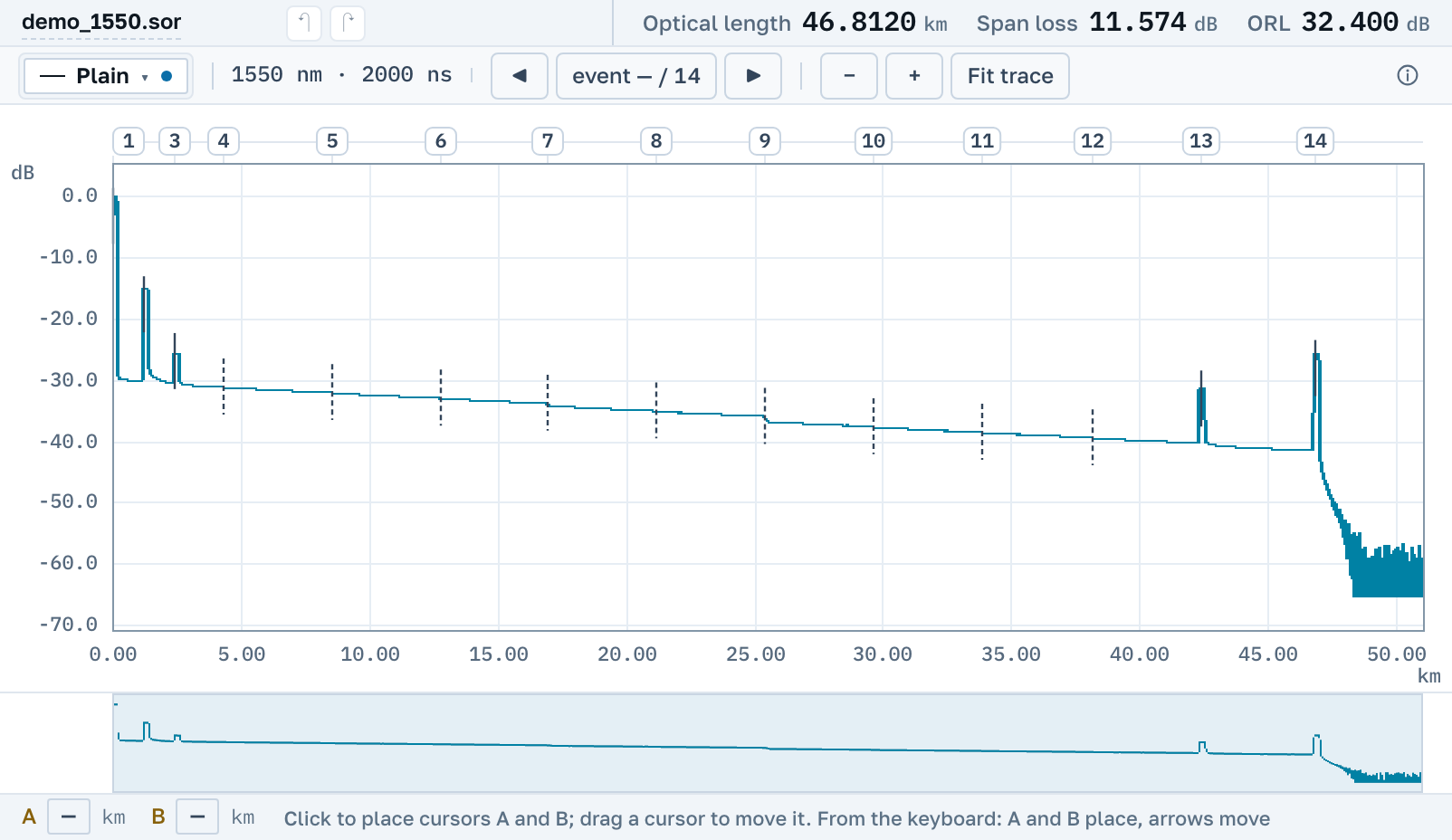
Files from EXFO instruments open, read and measure right here: .trc, .sor and bidirectional .bdr. No EXFO software, no Windows, no admin rights.
The .trc extension is older than the format under it today: the FTB-100 wrote EXFO-FCS, the FTB-300 an early AppReg, and AppReg Format Ex arrived only with the FTB-400. That is the one read here.
What we actually read
EXFO writes three different containers, and what tells them apart is the signature inside the file rather than the extension.
.trc: the EXFO container
"AppReg Format Ex" is what the FTB platforms write and FastReporter opens. The layout was measured across the instrument's own files, and every build checks them against EXFO's own engine: over two hundred traces and over a thousand events.
.sor from FTB platforms
EXFO's Telcordia dialect is read by the native parser, like any other instrument's file. That one you can also edit and save back as .sor.
.bdr: bidirectional
The same EXFO container, holding pairs instead of single fibres. Each fibre arrives as two traces, A→B and B→A, and both are visible on one chart.
EXFO OTDR viewer download, and why you needn't
There is nothing to install and no account needed. The page opens by link on macOS, Windows and Linux, from a tablet and from a phone.
What we do not read yet
The early EXFO containers from the FTB-100 and FTB-300 we name here, but do not open.
Nearby
.trc: three different formats under one extension→
How to open a .sor file→
How to read an OTDR trace→
VIAVI and JDSU instruments→
Anritsu instruments→
Why a connector reflects so much→
OTDR Master is an independent service. EXFO is a trademark of EXFO Inc.; we are not affiliated with the company and do not ship its software. We only read files its instruments write.